


Thin film process especially for metallic and ceramic materials
DLC coating (diamond-like carbon) protects components and tools against wear using a diamond-like carbon layer. It ensures durability and decreases loss of performance, especially where surfaces move against each other and create friction.
The diadur®DLC coating developed by pro-beam has been tried and tested in decades of successful application. It is based on a modern and environmentally-friendly plasma process. It combines high micro-hardness with excellent dynamic friction properties and is suitable for metallic and ceramic materials. The result: No loss of durability or warping. diadur®DLC is well suited for geometrically complex components.
The advantages of the diadur®DLC coating
- Optimum wear protection for components and tools through a DLC layer
- Increased product service life
- In connection with the application of products: Reduced friction, reduced loss of performance and less use of lubrication
- Suitable for ceramic materials (e.g. SiC, Al2O3), light metals, non-ferrous metals and all steels
- Bio-compatible and well suited for applications in medical and food engineering
- Reproducible quality thanks to fully automated process control
Application examples
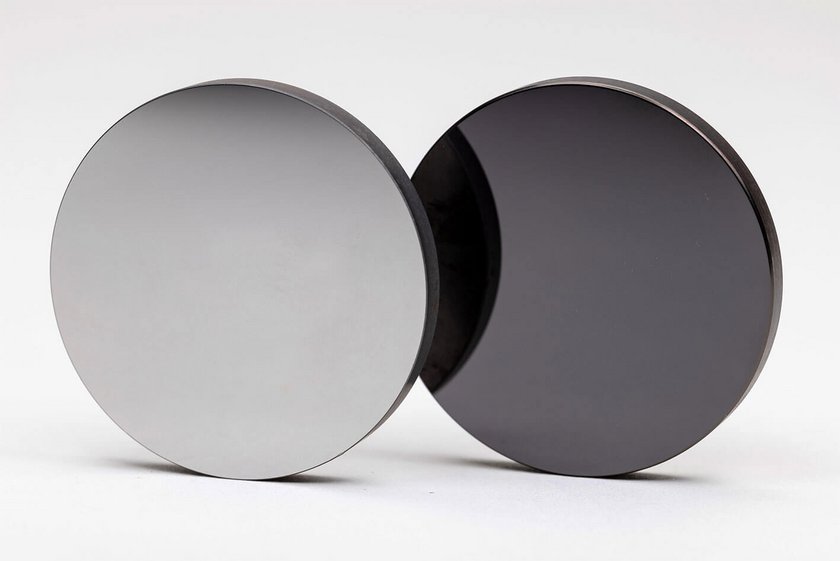
Coating of diverse materials
Dielectric materials, light metals, non-ferrous metals, all steels, ceramics
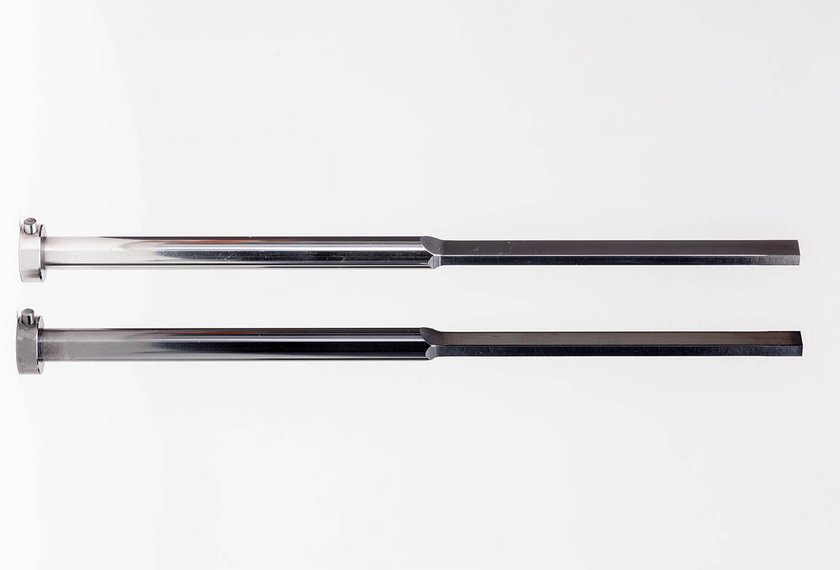
Coating of components with a length up to 1,300 mm
FAQ
FAQ
What is diadur®DLC?
- diadur®DLC is a DLC coating developed by pro beam and has been proven in industrial use over decades
- DLC generally stands for “Diamond-Like Carbon”
- diadur®DLC combines high hardness with excellent sliding friction properties, ensuring very high wear resistance
- diadur®DLC is suitable for use in a wide variety of applications and industries
What does diadur®DLC consist of?
- diadur®DLC consists of amorphous carbon with a fraction of hydrogen (Type: a-C:H).
- Interlayers or layers for specialized applications may contain additional elements
What advantages does diadur®DLC coating offer?
- Reproducible quality
- High hardness, significantly reduced friction
- Optimal wear protection for components and tools
- Reduces power losses
- Increases component service life
- Reduces lubricant consumption
- Non-stick properties, high chemical resistance
- Prevents cold welding and galling of mating metal parts
- Easy to clean
- Biocompatibility and allergen-free, suitable for:
- Food industry
- Medical technology
Which materials can be coated with diadur®DLC?
- Steels, stainless steels
- Light and non-ferrous metals (provided they are high-vacuum compatible)
- Aluminum, titanium, etc.
- Chrome-plated parts
- Dielectric materials (provided they are high-vacuum compatible)
- Ceramics: SiC, SiN, WC, Al2O3, etc.
- Glass
- Ask us about your specific material!
What component sizes can be coated with diadur®DLC?
- · Coating of components up to 750 mm in length is possible
How is diadur®DLC produced?
- Through Plasma-Activated Chemical Vapor Deposition (PACVD)
- Specially developed coating machines, which have been proven over decades, are utilized for both small and large-scale production runs
- The coating machines feature fully automated process control and monitoring
How does Plasma-Activated Chemical Vapor Deposition (PACVD) work?
- Components are securely positioned within a plasma chamber using suitable fixtures
- Process gases are introduced into the chamber at very low pressure
- A plasma, powered by high-frequency alternating voltage, induces the fragmentation and ionization of the process gas
- The plasma completely envelops the components and accelerates ionized particles toward the component surfaces
- Layer formation occurs through the reaction of these particles at the component surface, accompanied by the simultaneous densification of the layer via "ion bombardment"
What distinguishes the diadur® DLC PACVD process?
- Virtually all-around coating of three-dimensional components
- Low coating temperatures: approx. 50–300°C (depending on component geometry)
- Cost-effective coating of both small batches and larger production runs
- Coating of both conductive and dielectric materials
What layer thicknesses are possible?
- For most applications, an optimal coating thickness of 2–3 µm has proven effective
- Greater coating thicknesses of up to 4 µm, as well as multilayer coatings of up to 15 µm, are possible for specific applications following individual assessment
- We would be happy to advise you regarding the optimal coating thickness for your component geometry and application
What hardness does diadur®DLC achieve?
- Typically, the hardness lies between 1500 and 2500 HV
- Hardnesses of up to 4000 HV can be achieved
- The hardness depends on the component geometry and any layer modifications
What coefficient of friction can I expect with diadur®DLC?
- With optimal surface geometry, sliding friction properties approximately equivalent to those of PTFE (Teflon) against steel are achieved
What is the wear resistance of diadur®DLC?
- High wear resistance is ensured by the combination of good sliding friction properties and high hardness
- Numerical values are always dependent on the specific tribological system:
- Surfaces
- Friction partners
- Media
- Temperature
- Normal force
- Other application-specific factors
What temperatures are generated during diadur®DLC coating?
- The temperature during coating reaches a maximum of 300°C (572 °F) but typically remains significantly below this level
- The temperature depends on the surface-to-volume ratio of the component, as well as the heat capacity of the material
- Thin sheet metal parts become warmer than solid parts with high heat capacity and good heat dissipation
- Heating of the component is not required but occurs as a result of the process
Up to what temperature can diadur®DLC be used?
- Typically, up to 300°C
- Possibly slightly higher in the absence of oxygen
What is the chemical resistance of diadur®DLC?
- Generally good resistance to acidic and alkaline media
- Not resistant to strong oxidizing agents (e.g., hydrogen peroxide, ozone, conc. nitric acid, etc.)
Is diadur®DLC biocompatible?
- Yes, biocompatibility is good
- There are no allergy risks
- Suitable for the food industry as well as medical technology
What color is the diadur®DLC coating?
- At typical coating thicknesses, the coating appears black
- Depending on the surface roughness, the coating may also appear anthracite
- Very thin coating layers may shimmer with color due to interference
Can the layer properties be adjusted?
- Our experienced team will be happy to advise you on the optimal coating properties for your application
- pro beam can develop customized solutions for your application
TOP